
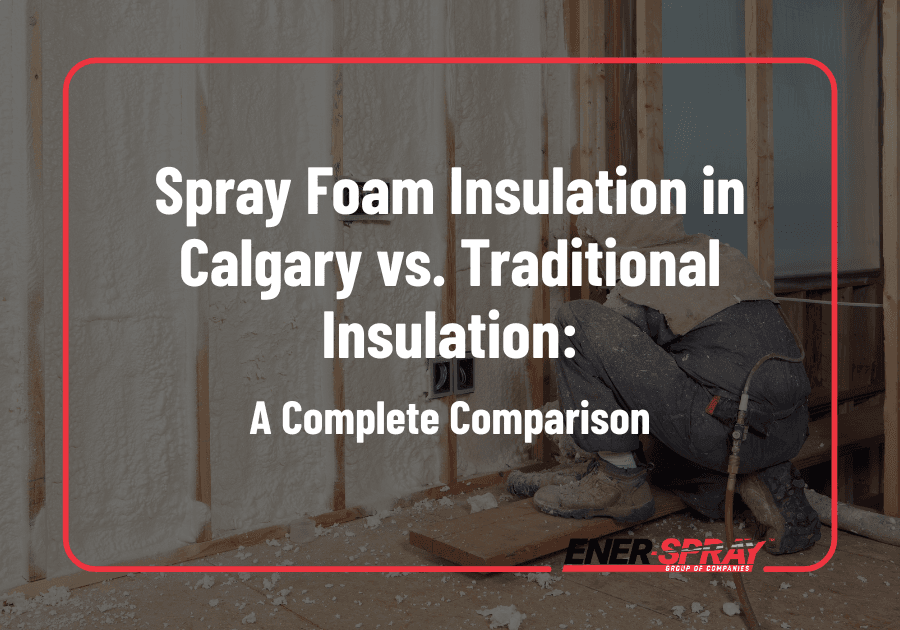
Rising heating bills, persistent drafts, cold spots near walls and windows, and inconsistent indoor temperatures are common frustrations for property owners in Calgary. When insulation starts underperforming, many people begin researching ways to improve energy efficiency, but quickly find themselves overwhelmed by competing claims about different insulation materials. Among the most common comparisons is spray foam insulation in Calgary versus traditional options such as fiberglass and cellulose. While each material is designed to reduce heat loss, they differ significantly in how they perform, how long they last, and how well they handle Calgary’s demanding climate. Understanding these differences can help property owners make a more informed decision about which insulation system best fits their building and budget.
Table of Contents
Understanding Traditional Insulation Materials
Before spray foam became widely available, most residential, commercial, and industrial buildings relied on traditional insulation materials such as fiberglass and cellulose. These products are still commonly used today because they are relatively affordable, readily available, and capable of slowing heat transfer when installed correctly.
Fiberglass Insulation
Fiberglass insulation is typically made from fine strands of glass formed into batts, rolls, or loose-fill material. It works by trapping pockets of air that help reduce the movement of heat through walls, ceilings, and floors.
Cellulose Insulation
Cellulose insulation, on the other hand, is usually made from recycled paper products treated for fire resistance and is commonly installed as loose-fill insulation in attics and wall cavities.
Both materials can provide effective thermal insulation under the right conditions. However, they primarily function by slowing heat transfer rather than stopping air movement. This means that while the insulation itself may have a respectable thermal rating, air can still leak through gaps, cracks, joints, and penetrations around the building envelope. Over time, factors such as settling, moisture exposure, and installation quality can also affect their long-term performance, particularly in climates that experience extreme temperature fluctuations.
What Is Spray Foam Insulation?
Unlike traditional insulation materials that are placed inside walls or attic spaces, spray foam insulation is applied as a liquid that rapidly expands after installation. As it expands, the material fills cracks, gaps, joints, and other hard-to-reach spaces before curing into a solid insulating layer.
One of the biggest differences between spray foam and traditional insulation is that spray foam acts as both insulation and an air barrier. Rather than simply slowing the movement of heat, it also helps prevent air from leaking through the building envelope. This dual function allows it to address two of the most common causes of energy loss: heat transfer and uncontrolled air movement.
Spray foam is generally available in two forms: open-cell and closed-cell. Open-cell foam is lighter and more flexible, making it suitable for certain interior applications. Closed-cell foam is denser, provides a higher insulation value per inch, and offers stronger resistance to moisture. Because of its durability and moisture resistance, closed-cell foam is often preferred for commercial buildings and exterior applications in colder climates, including spray foam insulation in Calgary.
Spray Foam vs. Fiberglass and Cellulose: How They Actually Compare
While all insulation materials aim to improve energy efficiency, they achieve that goal in different ways. Understanding these differences helps explain why performance can vary significantly over time.
Air Sealing
This is where spray foam has the greatest advantage. Fiberglass and cellulose can slow heat transfer, but they do not fully stop air movement. Small gaps around pipes, wiring, framing joints, and penetrations can still allow heated air to escape and cold outdoor air to enter. Spray foam expands into these spaces and creates a continuous air seal, reducing drafts and improving overall building performance.
Energy Efficiency
Because spray foam combines insulation and air sealing in one material, buildings insulated with it typically experience less heat loss in winter and less heat gain in summer compared to traditional insulation alone. Fiberglass and cellulose can still perform adequately when installed carefully and combined with separate air sealing measures, but achieving the same level of performance generally requires more work and more attention to detail during installation.
Moisture Resistance
Moisture is another important consideration, particularly in climates with significant temperature fluctuations. Fiberglass and cellulose can absorb or retain moisture under certain conditions, potentially reducing their insulating performance. Closed-cell spray foam provides a built-in moisture barrier that helps limit water intrusion and reduce the risk of condensation-related issues.
Durability and Lifespan
Spray foam is largely permanent once cured — it doesn’t settle, sag, or compress over time the way fiberglass batts can, and it doesn’t gradually lose loft the way cellulose sometimes does. This means its insulating performance tends to remain consistent for the life of the building, whereas traditional materials may need monitoring or replenishment over time, particularly in areas prone to settling or moisture exposure.
The Installation Process
Fiberglass and cellulose installation is generally faster and requires less specialized equipment, which is part of why they remain more affordable upfront. Spray foam application requires trained technicians, specialized equipment, and precise environmental conditions during installation, which adds to the cost but also reflects the more technical nature of the process.
Cost
Traditional insulation materials are less expensive on a per-square-foot basis, which makes them attractive for budget-conscious projects. Spray foam carries a higher upfront cost, but the combination of better energy efficiency, durability, and air sealing often results in lower long-term operating costs through reduced energy consumption and less frequent maintenance.
Which Option Makes Sense for Calgary’s Climate
Calgary’s climate is a significant factor in this decision. The city experiences extreme cold in winter, sudden temperature swings, and freeze-thaw cycles that put real demands on a building’s thermal envelope. In these conditions, air leakage isn’t just an inconvenience — it’s one of the biggest contributors to high energy costs and uncomfortable indoor environments.
Because spray foam insulation in Calgary creates a continuous air and thermal barrier, it tends to perform more consistently through Calgary’s seasonal extremes than traditional insulation alone. Its resistance to settling also means it maintains that performance over time, which matters in a climate where a building’s envelope is under near-constant thermal stress throughout the year.
That said, traditional insulation isn’t without merit in this climate. For budget-conscious projects, or in applications where air sealing is addressed separately through other building envelope measures, fiberglass or cellulose can still provide reasonable performance. The right choice ultimately depends on the building’s specific construction, existing condition, budget, and performance goals — which is why a professional assessment is worth pursuing before committing to either option.
Conclusion
Choosing the right insulation system is about more than comparing materials—it’s about solving the problems that prompted the search in the first place. If you’re dealing with high heating bills, persistent drafts, uneven indoor temperatures, or concerns about long-term energy efficiency, understanding the differences between traditional insulation and spray foam can help you make a more informed decision. As we’ve seen, traditional insulation remains a practical option in many situations, but spray foam insulation in Calgary offers distinct advantages when air sealing, moisture control, and long-term thermal performance are top priorities.
Ultimately, the best solution depends on your building’s design, condition, and performance goals. A professional assessment can identify where energy loss is occurring and determine whether spray foam, traditional insulation, or a combination of both will deliver the greatest value. If you’d like expert guidance tailored to your property, visit Ener-Spray’s spray foam insulation Calgary page or reach out to the Ener-Spray team to discuss your insulation needs and explore the most effective solution for your building.