
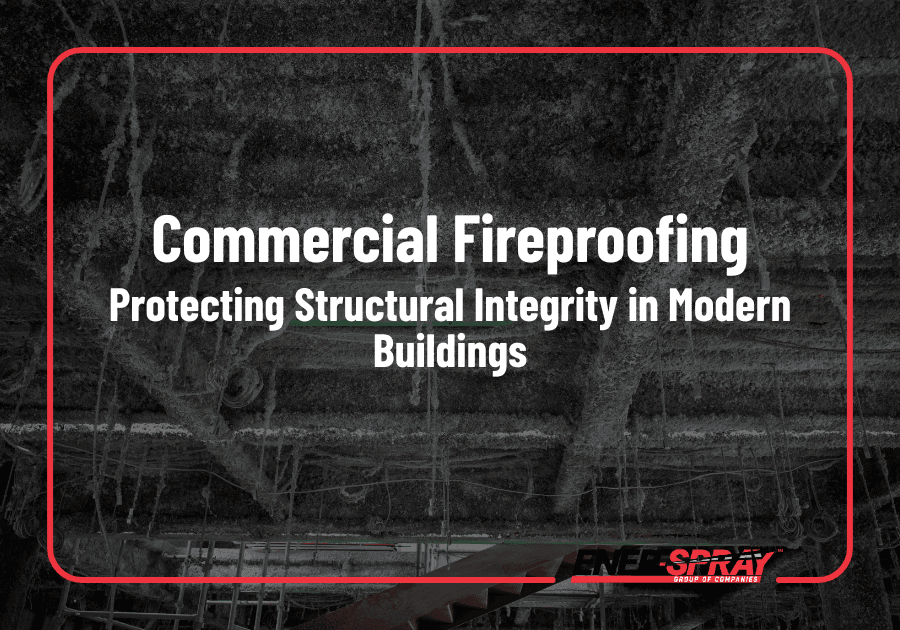
For commercial property owners, developers, and facility managers, fire risk is not just a safety concern—it is a structural and financial liability. A single incident can threaten lives, halt operations, damage assets, and expose owners to serious legal consequences. When reviewing building plans, undergoing renovations, or preparing for inspections, many decision-makers begin researching commercial fireproofing to better understand how to reduce these risks. Protecting a building means more than installing alarms and sprinklers; it requires safeguarding the structural framework that keeps the entire facility standing under extreme conditions.
Table of Contents
ToggleThe High Stakes of Structural Integrity During a Fire
During a fire, temperatures can rise rapidly to levels that compromise structural materials within minutes. Steel, while strong under normal conditions, begins to lose its load-bearing capacity as heat intensifies. Without protection, beams and columns can weaken, bend, or even fail, increasing the risk of partial or total collapse.
Concrete structures are not immune either. Prolonged exposure to high heat can cause cracking, surface spalling, and internal stress damage. In multi-storey commercial buildings, warehouses, manufacturing plants, and retail centers, structural failure can have devastating consequences—not only for occupants but also for first responders entering the building.
The true risk lies in how quickly structural elements can deteriorate once exposed to fire. Even if evacuation systems function properly, the building itself must remain stable long enough to allow people to exit safely and emergency crews to operate effectively. Protecting structural integrity during those critical minutes can make the difference between contained damage and catastrophic loss.
Why Commercial Fireproofing Is Essential for Modern Construction
Modern commercial buildings rely heavily on steel and reinforced concrete to create large open spaces, taller structures, and flexible layouts. While these materials offer strength and design freedom, they are vulnerable when exposed to extreme heat. Commercial fireproofing is essential because it adds a protective layer that slows down how quickly heat reaches these structural components.
Fireproofing systems are designed to insulate steel beams, columns, floor assemblies, and wall structures during a fire. By slowing heat transfer, they help maintain the load-bearing capacity of the building for a longer period of time. This delay is critical. It allows occupants more time to evacuate safely and gives emergency responders a more stable environment in which to operate.
In simple terms, fireproofing acts as a shield. It does not prevent a fire from starting, but it helps prevent the structure from failing too quickly. In modern construction—where buildings are often larger, more complex, and more densely occupied—this added layer of protection is not optional. It is a core part of responsible building design and long-term risk management.
Meeting Safety Standards and Legal Requirements
Beyond the moral obligation to keep people safe, commercial fireproofing is a fundamental legal and financial requirement. Most commercial buildings must meet specific fire-resistance ratings for structural elements. These ratings are established to ensure that critical components can withstand fire exposure for a defined period, such as one or two hours, depending on the building type and occupancy.
Failing to meet these standards can delay construction approvals, create issues during inspections, and increase liability for owners and developers. Insurance providers also evaluate fire protection measures when assessing risk. Properly installed fireproofing can support compliance, reduce potential disputes, and provide documentation that demonstrates a commitment to safety.
For property owners, compliance is not just about passing an inspection. It is about protecting occupants, preserving the value of the asset, and minimizing legal and financial exposure. When commercial fireproofing is properly specified and applied, it provides peace of mind that the building meets required standards and is prepared to perform as intended in the event of a fire.
Conclusion
When the stakes involve lives, property, and long-term business continuity, structural protection cannot be left to chance. As discussed above, commercial fireproofing plays a critical role in preserving structural integrity, slowing heat transfer, and helping buildings meet required safety standards. For owners and developers concerned about liability, inspection approvals, and the financial impact of a fire, taking proactive steps today can prevent devastating consequences tomorrow.
When choosing a partner for fireproofing, quality and compliance matter. Ener-Spray applies ULC-listed fireproofing materials that are rigorously tested for performance and designed to meet modern building codes, helping simplify inspections and support insurance requirements. As a member of the National Fireproofing Contractors Association with designated responsible individuals in key regions of Vancouver and Calgary, Ener-Spray combines certified materials, experienced crews, and dependable project delivery to keep your fire protection on schedule and on budget.
If you are planning a new construction, renovating an existing facility, or reviewing your compliance strategy, now is the time to evaluate your fire protection systems more closely. Visit Ener-Spray’s fireproofing page or schedule a consultation to discuss your project requirements.